New TOEIC Test parts – Regional TOEIC – The TOEIC Test (Test of English for International Communication has been around for a few years now, and has recently been updated.
The next stage of development of TOEIC, has included two new sections on regional listening and grammar – notably a section on West Country English from the county of Somerset in England.
The powers that be, in the organisation of the TOEIC exam have decided that Somerset is one of the regional accents that learners of English will need to equipe them for life and especially for professional life.
We are including, never-been-seen-before samples of two of the sections, which will be in place in the new TOEIC test, starting on 1 April 2017.
Of course this is just a bit of fun – and why not have a bit of fun whilst learning or improving your English …
Loading
Your form has been submitted
Thank you for giving your answers
Server Side Error
We faced problems while connecting to the server or receiving data from the server. Please wait for a few seconds and try again.
If the problem persists, then check your internet connectivity. If all other sites open fine, then please contact the administrator of this website with the following information.
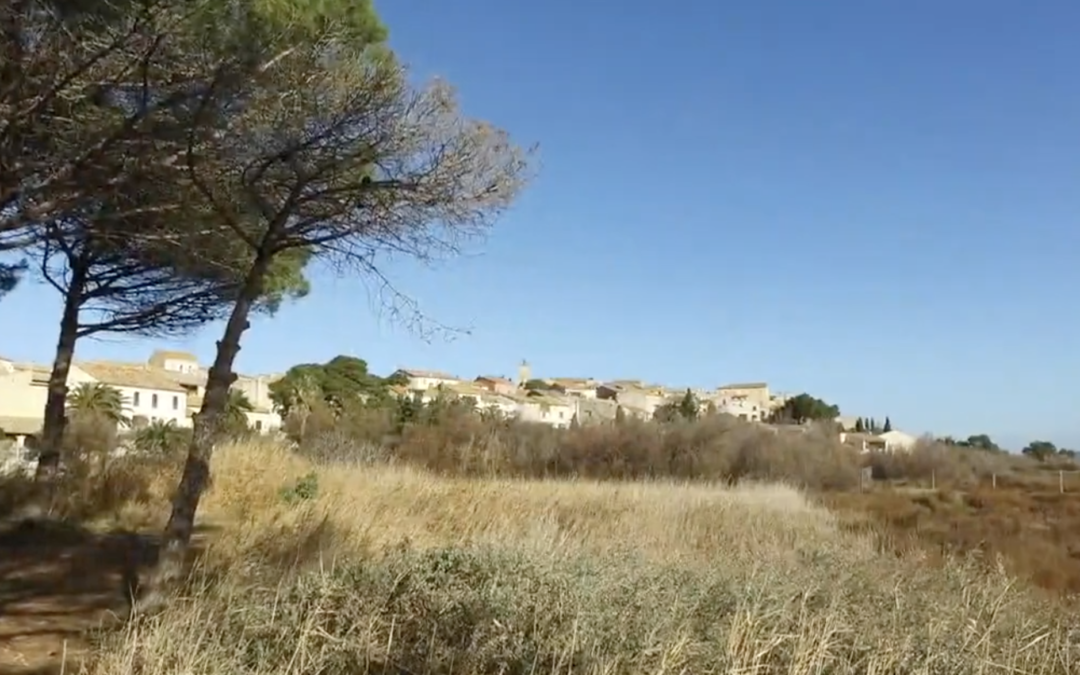
The Medieval village of Bages, France is set on the Mediterranean coast, near Narbonne.
The name of Bages appears for the first time in a document at the end of the 8th century, the territory of the commune was crossed by man since prehistoric times – two objects found at the Pavilion (a flint axe) and Java (a Bronze Age spearhead).
But the most numerous and important ancient remains date back to the Gallo-Roman period, and so we have been able to locate several sites of villas near the current village: Clozel, Croix-Petite, Col d’Estarac , Monédières, Castellas … And the very name ‘Prat-de-Cest’ is incontestably of Latin origin: “Pratum Sextum”, as mentioned an act of the 11th century, means “the meadows of the Sixth” (c ‘ that is to say six thousand Roman after Narbonne on Via Domitia).
From the medieval period, only the 11th century church remains, Much remodeled since, and a wall section of the old 13th century castle, as well as some buildings from the 11th century towards the area of Prat-de-Cest, and the Cross Lieue (13th century, restored in 1986) on the edge of the National 9, at the foot of the subdivision of Rochegrise.
Bages was then a small village of farmers and fishermen with only 58 habitations (slightly more than 200 inhabitants) in the 14th century. It belonged to the chapter of the canons of the church Saint-Paul de Narbonne which remained “lord of Bages” until the French Revolution.
In the 16th and 17th centuries, Bages was not spared by the politico-religious conflicts that were tearing the country apart: thus the village was a highly disputed strategic point during the wars of the League between 1585 to 1596, then during the Duke’s rebellion of Montmorency in 1632.
From the reign of Louis XIII to the end of the old regime, despite the wars and a number of natural disasters, Bages went through a period development.
With more than 800 people in 1784, it was administered by three consuls, elected each year by the “general council” of the community. The economy was based essentially on agriculture (cereals, more than vines), olive groves, livestock (mainly sheep and goats), fishing and crafts.
Under the Revolution and the Empire, Bages (to which the area of Prat-de-Cest is attached) adapted as best as possible to the new institutions of the country, paying as many villages did, a heavy price for the Napoleonic wars ( the expedition of Egypt, in 1798-99, alone killed eighteen Bagesois).
Fishermen benefited from the establishment of a prud’homie in 1801, and an important salt marsh was created in Estarac in 1811 (it was stilll working until the beginning of the 1950s).
Falling to less than 700 inhabitants in the early 19th century, Bages remained a small fishing village, with farmers and artisans, slowly opening up to the modern world only under the July Monarchy (1830-1848).
Thanks to viticulture, it began to take off during the Second Empire and the beginning of the Third Republic, reaching almost 1,200 inhabitants in the early 1880s. It was then in full prosperity as is shown by the extension of the village beyond the old medieval wall, with the construction of many buildings including the communal school (today Center Louis Daudé) in 1884.
Like all the communes of the Narbonnais, it was affected by the phylloxera crisis, then by the viticultural crisis of 1907, many Bageois participated in large numbers in the protests launched by Marcellin Albert: one of them, an agricultural worker, 18 year old, Gaston Pagès, wass killed by soldiers during a demonstration in Narbonne on June 20, 1907.
After the Great War, during which 31 Bageois perished in the field of battle, the commune experienced a steady decline until the end of the 1960s, falling to around 550 inhabitants.
The old village and the hamlet of Pesquis then had many houses in ruins; only, Prat-de-Cest, on the National 9, developed, aspiring even to become an independent commune.
It was not until the 1970s, thanks to the control of mosquito infestation and the establishment of an modern sewerage system, that the renewal of the commune occurred, which now has more than 800 inhabitants.
Although viticulture and fishing are still present, they don’t play more than a secondary role in the local economy, Bages welcomes more and more a people attracted by the beauty of the site.
Yuka The Healthy Eating App that checks out the quality of your shopping basket Do you really know what you eat? Well yes! With Yuka The Healthy Eating App you can scan your products and analyze their impact on your health.
In the blink of an eye, Yuka The Healthy Eating App decodes complicated and sometimes confusing labels for you: you visualise products that are good and those that are best avoided.
Get personalized recommendations for your shopping When you scan a product that has a negative impact on your health, Yuka The Healthy Eating App recommends a better equivalent product.
So, you continue to enjoy yourself while eating healthier!
An independent evaluation based on 3 criteria
Nutritional quality 60% of the evaluation is based on nutritional quality, which takes into account the amount of energy, saturated fats, sugars, salt, fruits and vegetables, fiber and protein of the product. The calculation method is based on the Nutriscore (brand of Public Health France), built by Professor Serge Hercberg.
Additives 30% of the evaluation is based on the presence of harmful additives in the product. Yuka is based on many sources that have studied the dangerousness of food additives, among which are: “Food additives” Corinne Gouget, “Food additives” Maire-Laure André and the studies of the UFC Que Choisir, The French equivalent of ‘Which’ Magazine.
Biological dimension 10% of the evaluation is based on the biological dimension of the product.
Products considered organic are those with the French bio label (AB) and / or the European organic label (Eurofeuille) Yuka uses the OpenFoodFacts free database.
Yuka The Healthy Eating App is free and available for download to a smartphone – have a look at the Yuka Website.
We’re going to be looking at ways that we can enhance and improve our learning and perhaps crushing some of the myths about learning techniques that we learnt in school.
Every day we meet people with different techniques for learning vocabulary, but most of them revolve around some pretty shaky ideas, those being ‘if you write stuff down, you’ve learnt it.’
If only things were that simple …
This rarely works, due mainly to the fact that some important steps have been missed out – those being, actively learning the vocabulary and then actively using it.
Let’s put this in prallel with sport, to illustrate the idea.
Imagine that you are a huge cycling fan and you love the Tour de France and you would like to experience the grueling (look that one up if you like) hardships of a day riding in the mountains of the Tour de France.
So, you get all the magazines about the Tour and mountain cycling, you have the maps and you have read all the technical stuff on hydration and nutrition during a massive climb in the Pyrenees mountains in the south of France.
You have even chosen your mountain, Le Col du Tourmalet – wow! that’s a big one, and have bought a fabulously expensive ‘S-Works’ bicycle for the climb.
You’ve seen the videos and read all the information, but that’s as far as you go – THAT is how a lot of people learn – they don’t go the final mile of training before getting on the bike after weeks of muscle and stamina building. They don’t prepare for the day that they will be climbing Tourmalet on their bike.
OK, they know all about Tourmalet, Le Tour de France and mountaing cycling – but they have no guarantee of ever being able to achieve the ascent of a mountain on their bicycle.
Tune in to get some ideas to improve your learning.